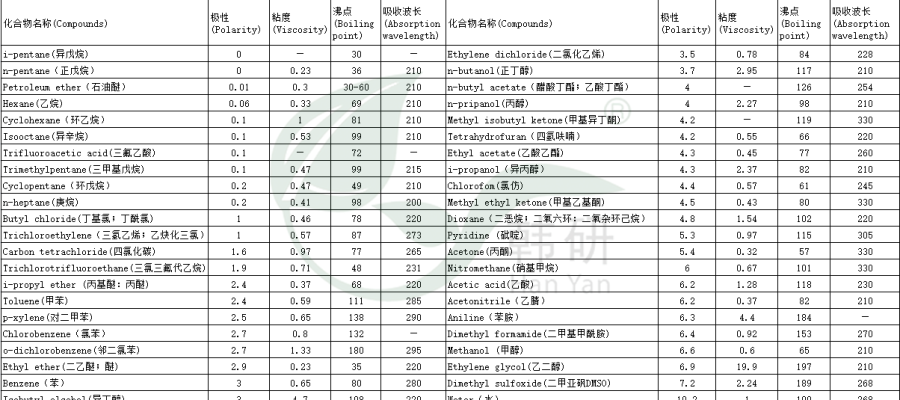
polarity sheet

What Impurities Can Activated Carbon Adsorb?

LinkedIn
Facebook
WhatsApp

Activated carbon is a normal, safe and effective adsorbent which widely used in many industries. It can adsorb most of unwanted impurities but not for all. Let’s know more in the below article.

Activated Carbon Adsorption

Activated carbon has developed pore structure, and based on Van der Waals Forces, these pores of activated carbon has adsorption forces to adsorb different impurities, and the adsorption performance is due to the polarity of them.

Van der Waals Forces & Polarity

  • Van der Waals force is a distance-dependent interaction between atoms or molecules.
  • Polarity is a separation of electric charge leading to a molecule or its chemical groups having an electric dipole moment, with a negatively charged end and a positively charged end.
  • Relationship: Van der Waals forces consist of dispersion force, induced force, and orientation force. The greater the polarity, the stronger the attraction between the inherent dipoles of the molecule, it means that the greater the dispersion force, the greater the van der Waals force.

What Impurities Can Activated Carbon Adsorb?

According to the conclusions drawn by our engineers through repeated experiments, activated carbon can efficiently adsorb substance with polarity under 4 by physical adsorption method. Regarding the one with polarity over 4, it is better to apply solvent recovery or condensation treatment.
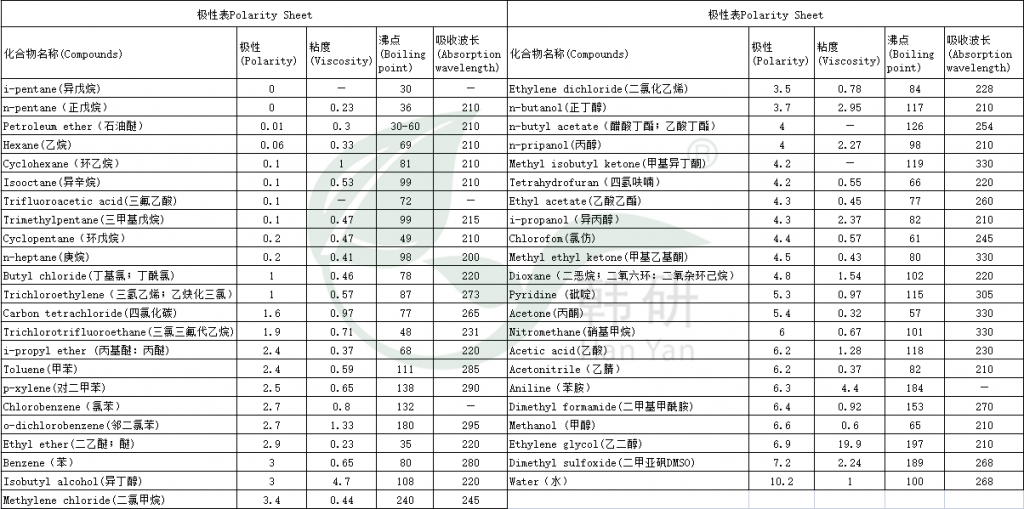
Polarity Sheet

More to explorer

from-granular-to-honeycomb-activated-carbon

Emerging Trends in Gas-Phase Filtration: From Granular to Honeycomb Activated Carbon

Gas-phase filtration is evolving from traditional granular activated carbon beds toward more structured and efficient media designs. Honeycomb activated carbon is gaining attention in VOC removal and industrial air purification because of its low pressure drop, straight airflow channels, and compact modular structure. While granular activated carbon remains widely used, honeycomb activated carbon provides new advantages for large-air-volume and energy-conscious purification systems.

ceramic-vs-activated-carbon-honeycomb

Comparing Ceramic and Activated Carbon Honeycombs in Air Purification

Ceramic honeycombs and activated carbon honeycombs both have honeycomb structures, but they serve different purposes in air purification. Ceramic honeycombs are mainly used as catalyst carriers or high-temperature substrates, while activated carbon honeycombs are more directly applied in VOC adsorption, odor control, and gas-phase filtration. For many current industrial air purification projects, activated carbon honeycomb offers broader adaptability under normal-temperature and low-to-medium concentration conditions.

How Humidity and Temperature Affect Honeycomb Activated Carbon in VOC Treatment

How Humidity and Temperature Affect Honeycomb Activated Carbon in VOC Treatment

In industrial VOC treatment, the performance of honeycomb activated carbon is influenced not only by the carbon itself, but also by operating conditions such as humidity and temperature. High moisture can compete for adsorption sites, while elevated temperature can reduce equilibrium adsorption capacity and shorten effective service life. This article explains why environmental conditions matter and how operators can evaluate honeycomb activated carbon more realistically under actual system conditions.

small_c_popup.png

Let's have a chat

Learn how we can help you for your need!