HANYAN Blog

How Humidity and Temperature Affect Honeycomb Activated Carbon in VOC Treatment
TECHNICAL GUIDE

How Humidity and Temperature Affect Honeycomb Activated Carbon in VOC Treatment

In industrial VOC treatment, the performance of honeycomb activated carbon is influenced not only by the carbon itself, but also by operating conditions such as humidity and temperature. High moisture can compete for adsorption sites, while elevated temperature can reduce equilibrium adsorption capacity and shorten effective service life. This article explains why environmental conditions matter and how operators can evaluate honeycomb activated carbon more realistically under actual system conditions.

Read More »
How to Identify Breakthrough of Honeycomb Activated Carbon in VOC Systems
TECHNICAL GUIDE

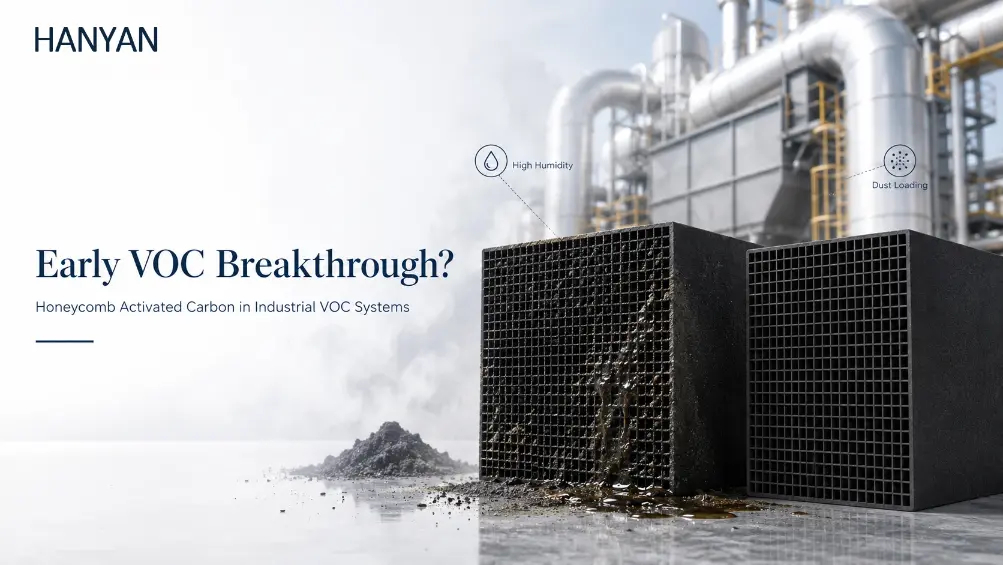
How to Identify Breakthrough of Honeycomb Activated Carbon in Industrial VOC Systems

Breakthrough of honeycomb activated carbon does not always mean the adsorbent is fully exhausted. In industrial VOC systems, it often begins with subtle changes such as outlet concentration fluctuation, odor return, or shortened service cycles. This article explains what breakthrough means, what causes it, and how operators can identify it earlier through practical monitoring and operating records.

Read More »
Honeycomb Activated Carbon vs. Other VOC Control Options
TECHNICAL GUIDE

Honeycomb Activated Carbon vs. Other VOC Control Options: When Is Adsorption the Better Choice?

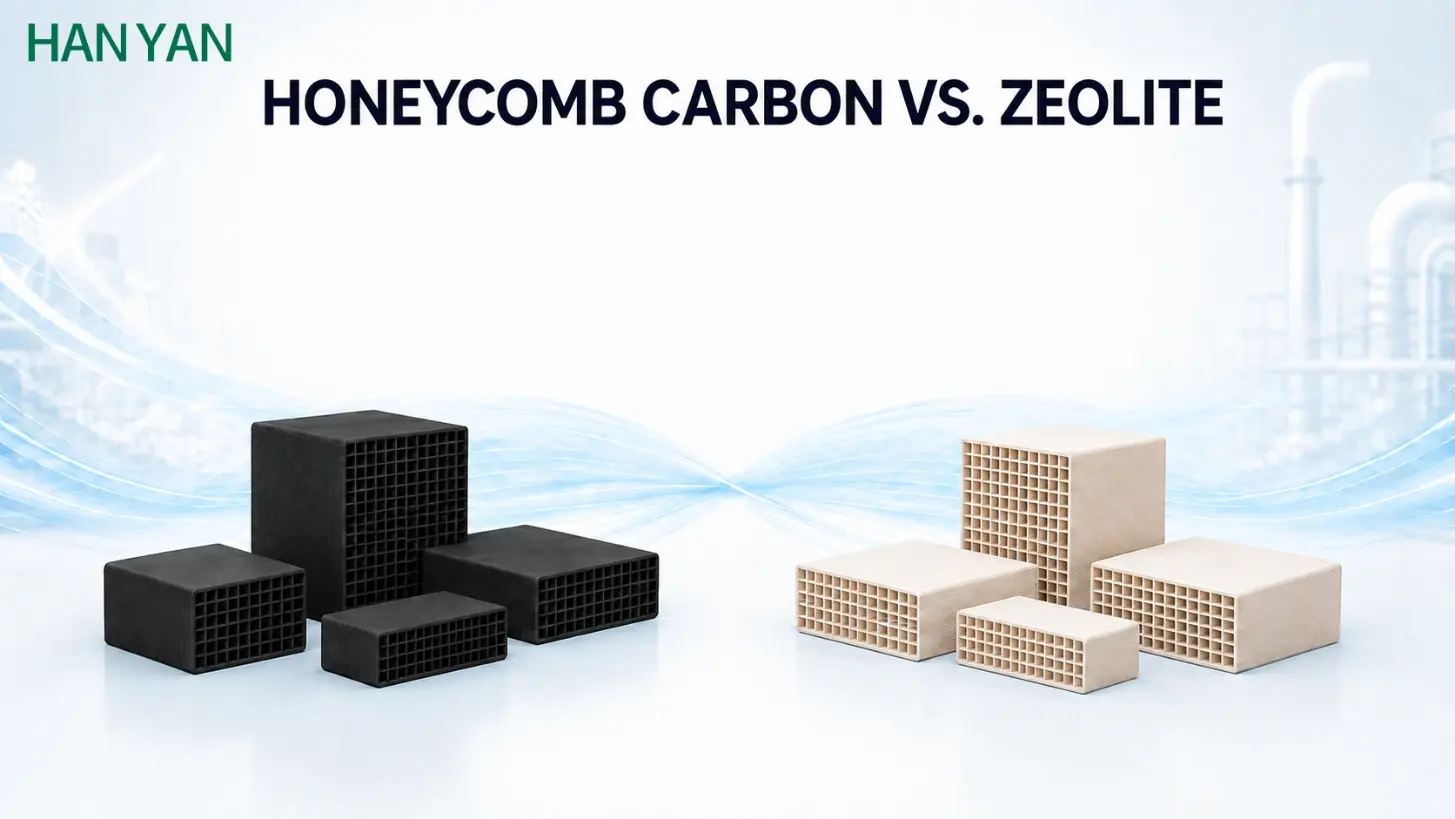
Not every VOC project should use the same treatment route. Honeycomb activated carbon adsorption can be an excellent choice for certain airflow, concentration, and operating conditions, but in other cases thermal or catalytic oxidation may be more suitable. The right decision depends on system goals, energy use, footprint, gas composition, and maintenance strategy.

Read More »
Honeycomb Activated Carbon Engineering Guide
TECHNICAL GUIDE

Honeycomb Activated Carbon Engineering Guide

This engineering guide consolidates key technical principles behind honeycomb activated carbon performance, including airflow resistance, CPSI, contact time, and breakthrough behavior. Designed for industrial gas-phase filtration professionals, it provides a structured framework for system-level evaluation and optimization.

Read More »
activated-carbon-CPSI
TECHNICAL GUIDE

Why CPSI Alone Cannot Define Honeycomb Activated Carbon Performance

This article explains why CPSI (cells per square inch) should not be treated as a standalone performance indicator for honeycomb activated carbon filters. By examining airflow behavior, contact time, adsorption kinetics, and carbon utilization, it highlights the limitations of CPSI-only comparisons and provides a more practical engineering perspective for industrial gas-phase filtration design.

Read More »
Honeycomb activated carbon filter in industrial gas-phase ventilation system
TECHNICAL GUIDE

Pressure Drop vs Adsorption Performance in Honeycomb Activated Carbon Filters

This article explains the engineering relationship between pressure drop and adsorption performance in honeycomb activated carbon filters. It clarifies why very low resistance can reduce contact time and carbon utilization, leading to earlier breakthrough. Practical guidance is provided to help engineers balance fan energy, airflow velocity, and adsorption kinetics for application-specific performance.

Read More »