
How to Prevent Air Bypass in Honeycomb Activated Carbon Systems

Air bypass can reduce the performance of a honeycomb activated carbon system by allowing untreated gas to pass through installation gaps. Proper block arrangement, sealing and airflow distribution help ensure more effective gas–carbon contact.
Emerging Trends in Gas-Phase Filtration: From Granular to Honeycomb Activated Carbon
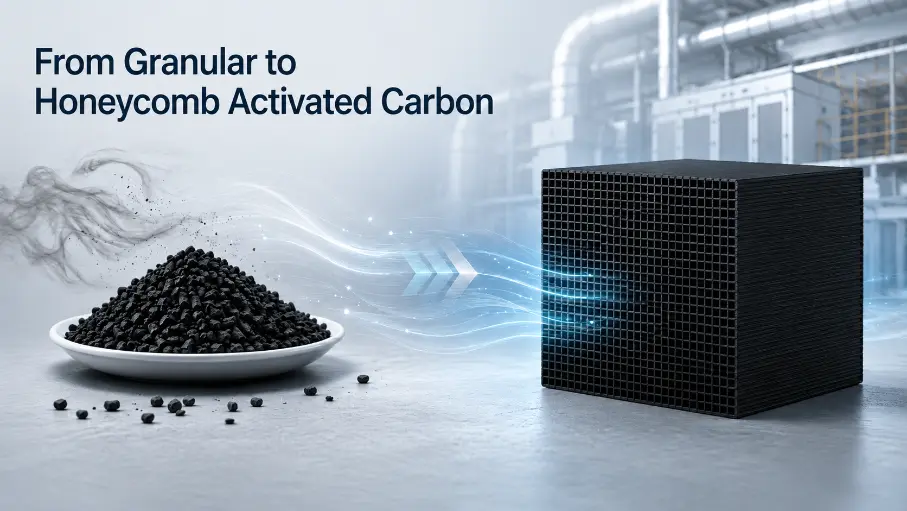
Gas-phase filtration is evolving from traditional granular activated carbon beds toward more structured and efficient media designs. Honeycomb activated carbon is gaining attention in VOC removal and industrial air purification because of its low pressure drop, straight airflow channels, and compact modular structure. While granular activated carbon remains widely used, honeycomb activated carbon provides new advantages for large-air-volume and energy-conscious purification systems.
Comparing Ceramic and Activated Carbon Honeycombs in Air Purification
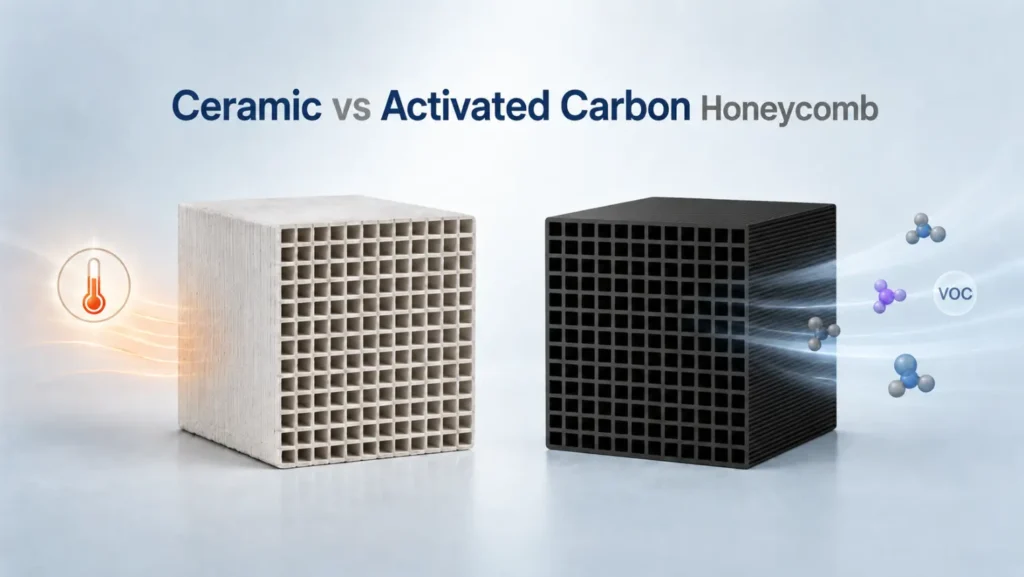
Ceramic honeycombs and activated carbon honeycombs both have honeycomb structures, but they serve different purposes in air purification. Ceramic honeycombs are mainly used as catalyst carriers or high-temperature substrates, while activated carbon honeycombs are more directly applied in VOC adsorption, odor control, and gas-phase filtration. For many current industrial air purification projects, activated carbon honeycomb offers broader adaptability under normal-temperature and low-to-medium concentration conditions.
Honeycomb Activated Carbon vs. Other VOC Control Options: When Is Adsorption the Better Choice?
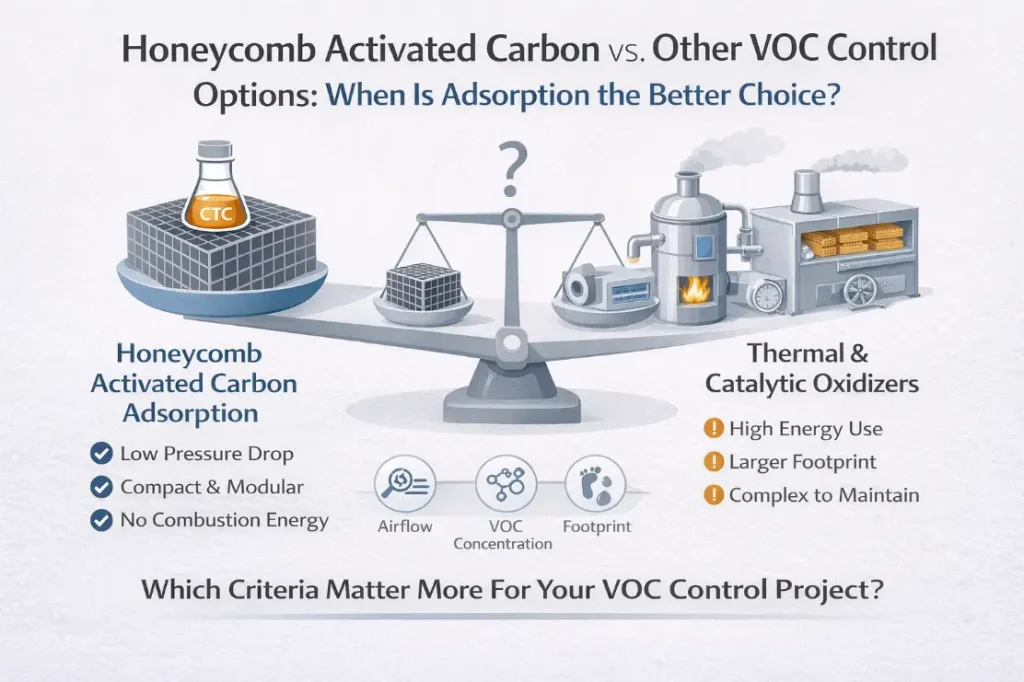
Not every VOC project should use the same treatment route. Honeycomb activated carbon adsorption can be an excellent choice for certain airflow, concentration, and operating conditions, but in other cases thermal or catalytic oxidation may be more suitable. The right decision depends on system goals, energy use, footprint, gas composition, and maintenance strategy.