
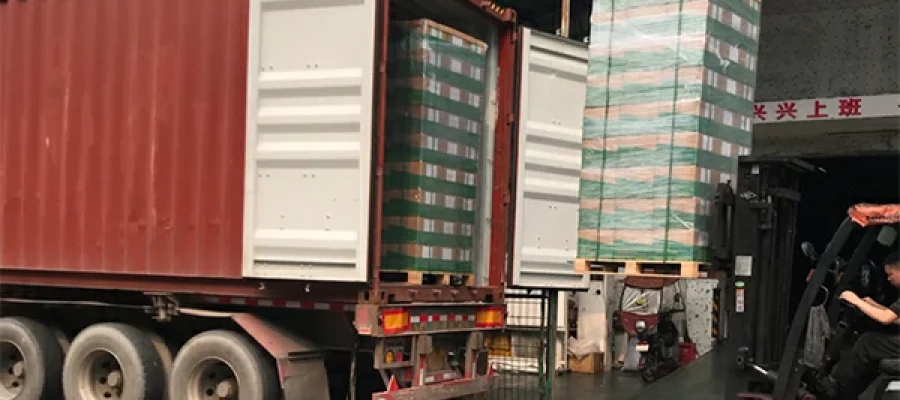
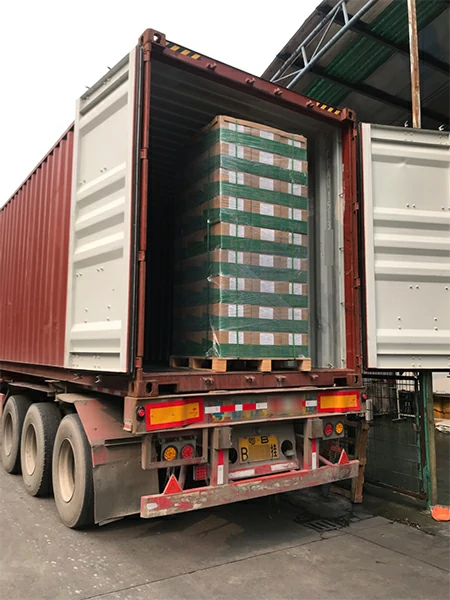
When customers plan shipments of honeycomb activated carbon, one of the most common questions is: “How many pieces can loaded in a 20GP or 40HQ container?” Because honeycomb activated carbon is fragile and available in different sizes, understanding loading capacity is essential for shipment planning, cost calculation, and packaging design.
Below is a clear and practical guide based on actual packing data from our production.
1. Loading Capacity for Standard 100×100×100 mm Honeycomb Activated Carbon
For the standard size 100×100×100 mm, the exact loading capacity is:
| Container Type | Cartons per Pallet | Pallets per Container | Total Quantity |
|---|---|---|---|
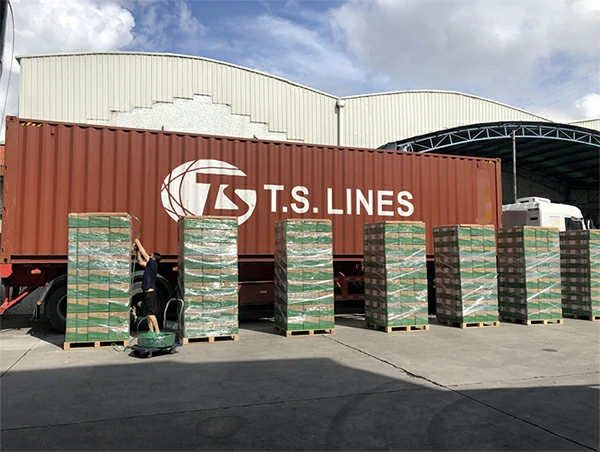
| 20GP | 72 cartons / pallet | 10 pallets | 12,960 pcs |
| 40HQ | 81 cartons / pallet | 22 pallets | 32,076 pcs |
These quantities are based on our optimized palletized packaging method, ensuring both space efficiency and product protection.

2. Loading Capacity for 100×100×50 mm Honeycomb (Half-Height)
For half-height blocks (100×100×50 mm), the quantity is generally proportional and approximately double:
| Container Type | Estimated Total Quantity (100×100×50 mm) |
|---|---|
| 20GP | About 25,920 pcs |
| 40HQ | About 64,000 pcs |
The exact quantity may vary depending on carton strength, thickness, and additional internal protection layers.
3. For Non-Standard Sizes, Custom Cartons and Recalculation Are Required
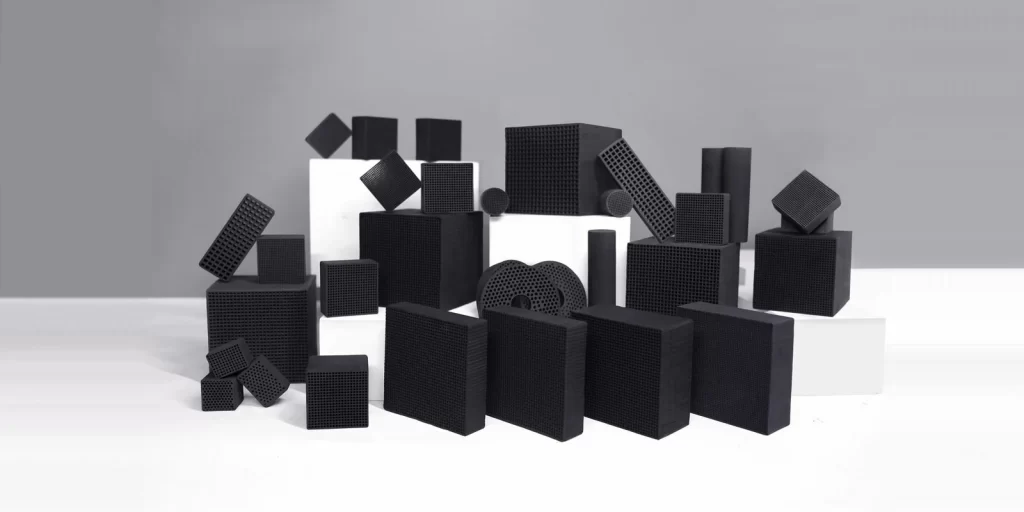
Honeycomb activated carbon can be produced in many customized sizes, such as:
- 20×20 mm
- 30×30 mm
- 35×45 mm
- 50×50 mm
- 100×50 mm
- 100×150 mm
- Round modules
- Special CPSI and wall thickness
- ……
Because each size of product has different carton dimensions and packing configurations:
- The number of pieces per carton must be recalculated
- Carton size determines pallet layout
- Pallet height and container utilization must be recalculated
Therefore, non-standard sizes require customized cartons and an accurate loading calculation after confirming the final packaging design.
4. Small Trial Orders: Why We Use Protective Plywood Boxes
Honeycomb activated carbon is a fragile, ceramic-like structure. For trial orders or small quantities, standard cartons cannot provide sufficient strength during long-distance international transport.
To ensure samples arrive safely:
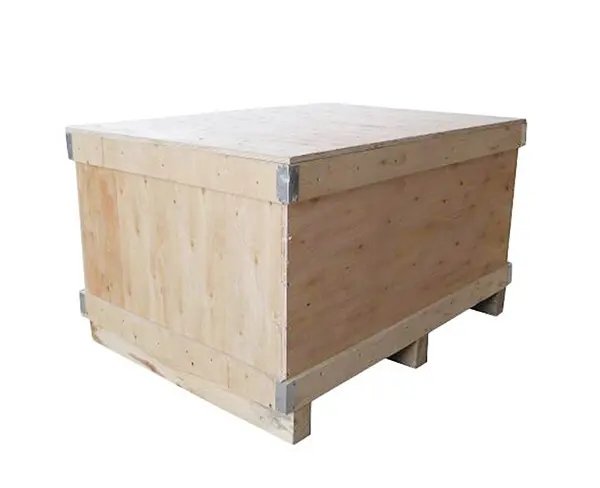
✔ We pack small trial orders in plywood protective boxes instead of regular cartons.
Advantages of plywood boxes:
- Higher impact resistance
- Better compression strength
- Effective protection against vibration
- Prevents edge chipping and cracking
This ensures that even small sample shipments arrive in perfect condition.
Conclusion
Understanding container loading capacity helps customers plan shipments more efficiently and avoid unexpected logistics issues. If you need a detailed loading plan for your specific honeycomb activated carbon size, our team can prepare and suggest carton specifications, pallet layout, and container loading plan for your reference.
Article Keywords: honeycomb activated carbon, container loading, 20GP capacity, 40HQ capacity, honeycomb carbon packaging, fragile material protection, pallet loading plan, customized honeycomb activated carbon