
Comparing Ceramic and Activated Carbon Honeycombs in Air Purification
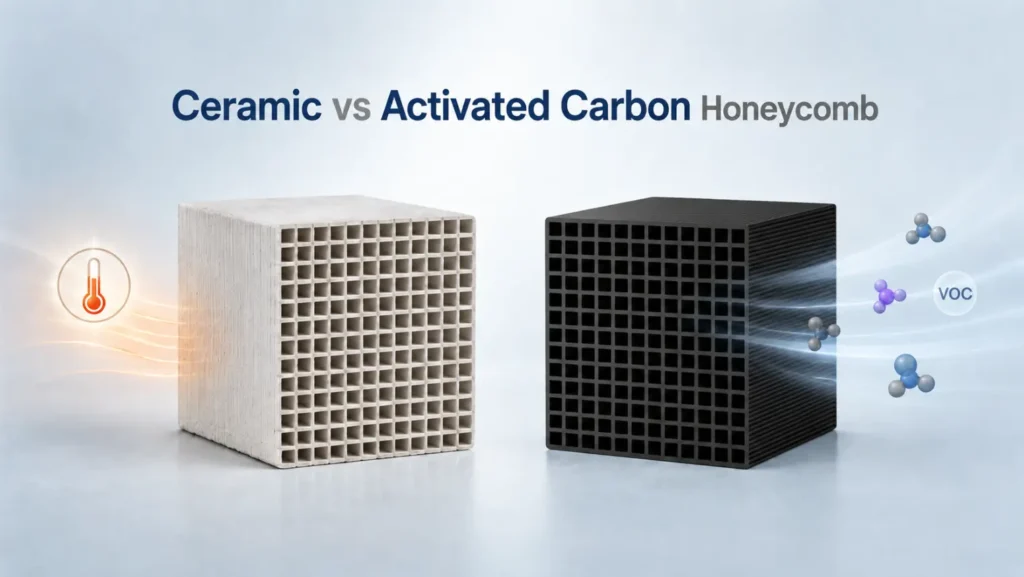
Ceramic honeycombs and activated carbon honeycombs both have honeycomb structures, but they serve different purposes in air purification. Ceramic honeycombs are mainly used as catalyst carriers or high-temperature substrates, while activated carbon honeycombs are more directly applied in VOC adsorption, odor control, and gas-phase filtration. For many current industrial air purification projects, activated carbon honeycomb offers broader adaptability under normal-temperature and low-to-medium concentration conditions.
Why CPSI Alone Cannot Define Honeycomb Activated Carbon Performance
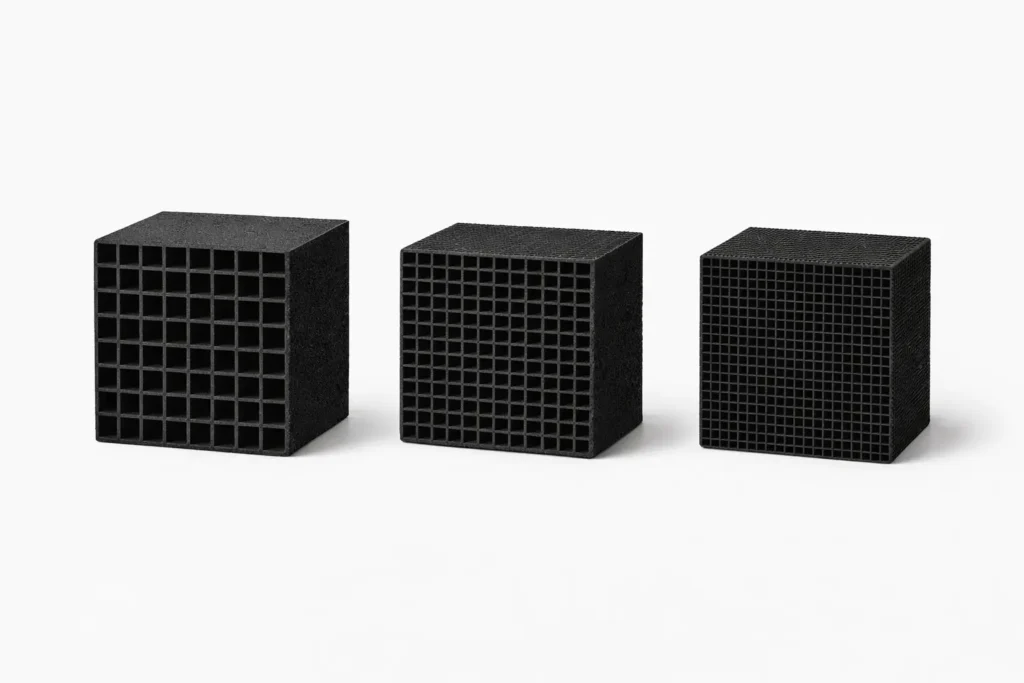
This article explains why CPSI (cells per square inch) should not be treated as a standalone performance indicator for honeycomb activated carbon filters. By examining airflow behavior, contact time, adsorption kinetics, and carbon utilization, it highlights the limitations of CPSI-only comparisons and provides a more practical engineering perspective for industrial gas-phase filtration design.
Pressure Drop vs Adsorption Performance in Honeycomb Activated Carbon Filters
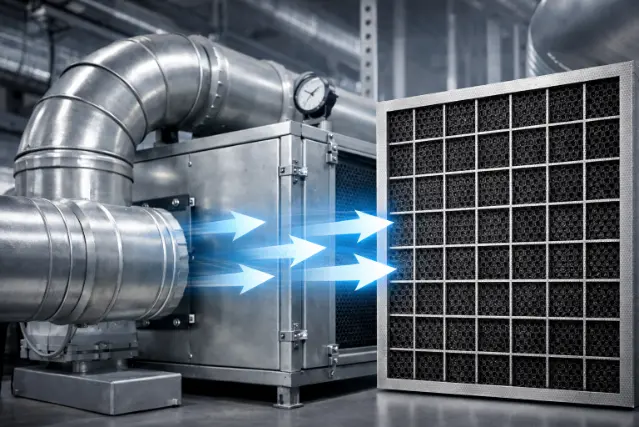
This article explains the engineering relationship between pressure drop and adsorption performance in honeycomb activated carbon filters. It clarifies why very low resistance can reduce contact time and carbon utilization, leading to earlier breakthrough. Practical guidance is provided to help engineers balance fan energy, airflow velocity, and adsorption kinetics for application-specific performance.
The Role of Honeycomb Activated Carbon in VOC Control Systems | HANYAN

A practical guide to designing and operating VOC control systems with honeycomb activated carbon – covering mechanisms, parameters, applications, regeneration, and integration best practices.