
Honeycomb Activated Carbon Engineering Guide
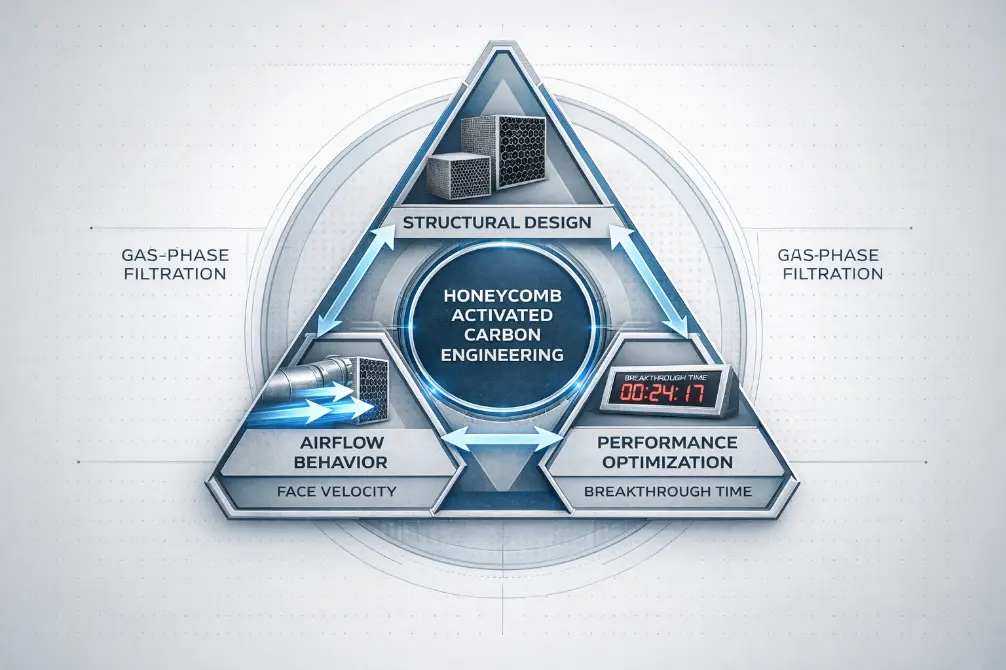
This engineering guide consolidates key technical principles behind honeycomb activated carbon performance, including airflow resistance, CPSI, contact time, and breakthrough behavior. Designed for industrial gas-phase filtration professionals, it provides a structured framework for system-level evaluation and optimization.
Why CPSI Alone Cannot Define Honeycomb Activated Carbon Performance
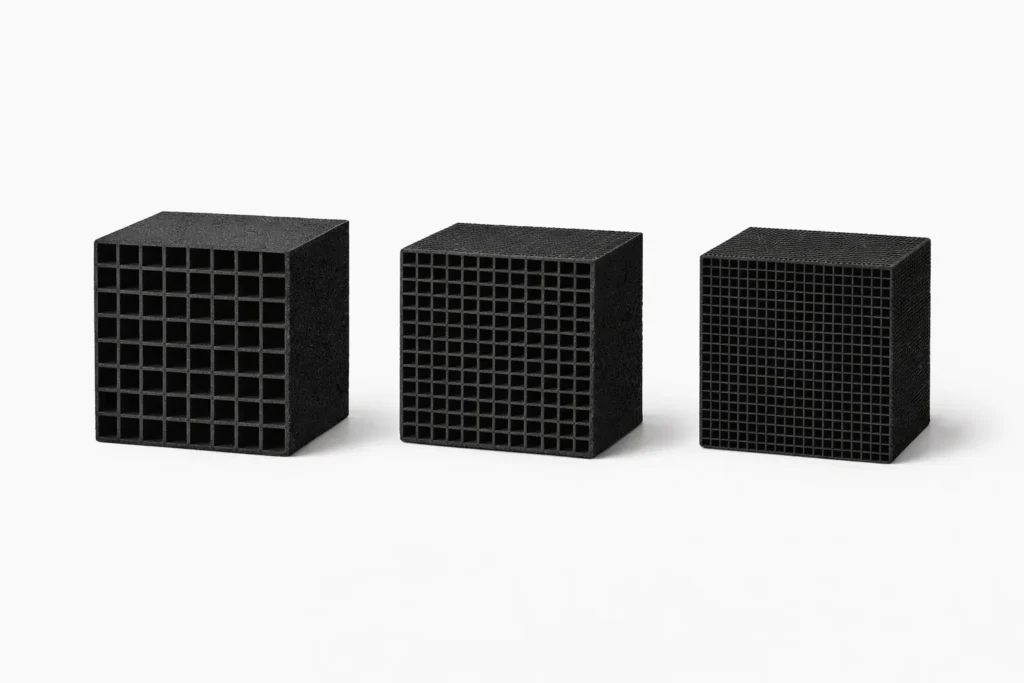
This article explains why CPSI (cells per square inch) should not be treated as a standalone performance indicator for honeycomb activated carbon filters. By examining airflow behavior, contact time, adsorption kinetics, and carbon utilization, it highlights the limitations of CPSI-only comparisons and provides a more practical engineering perspective for industrial gas-phase filtration design.
Pressure Drop vs Adsorption Performance in Honeycomb Activated Carbon Filters
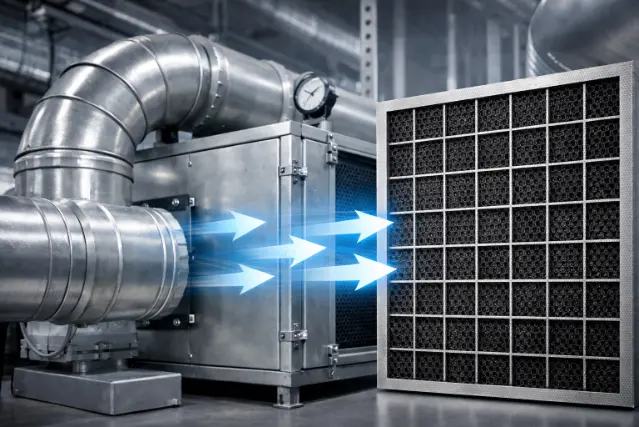
This article explains the engineering relationship between pressure drop and adsorption performance in honeycomb activated carbon filters. It clarifies why very low resistance can reduce contact time and carbon utilization, leading to earlier breakthrough. Practical guidance is provided to help engineers balance fan energy, airflow velocity, and adsorption kinetics for application-specific performance.
The Role of Honeycomb Activated Carbon in VOC Control Systems | HANYAN

A practical guide to designing and operating VOC control systems with honeycomb activated carbon – covering mechanisms, parameters, applications, regeneration, and integration best practices.
Why Wall Thickness Matters in Honeycomb Activated Carbon Filters
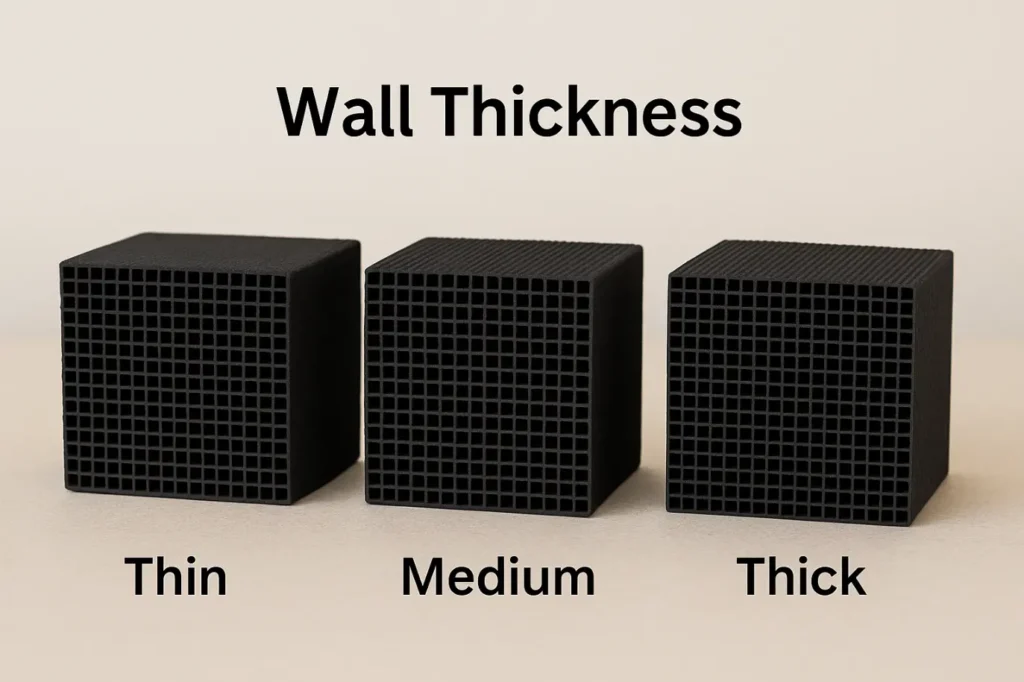
Learn why wall thickness is critical in honeycomb activated carbon filters. Improve airflow, efficiency, and filter lifespan by choosing the right design parameters.
How to Choose the Right CPSI for Honeycomb Activated Carbon
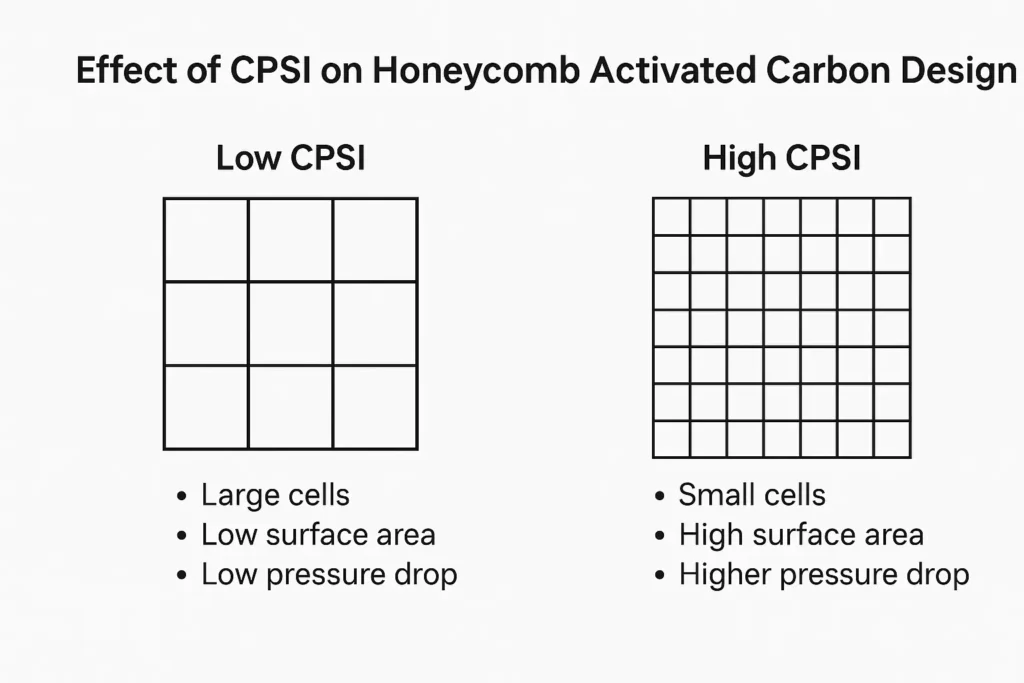
CPSI (Cells Per Square Inch) is a critical design factor for honeycomb activated carbon filters. This article explores how CPSI impacts airflow resistance, adsorption efficiency, and mechanical strength, and provides practical guidelines for selecting the optimal structure for different applications.
Honeycomb Activated Carbon Filters: Understanding Pressure Drop for Optimal Performance
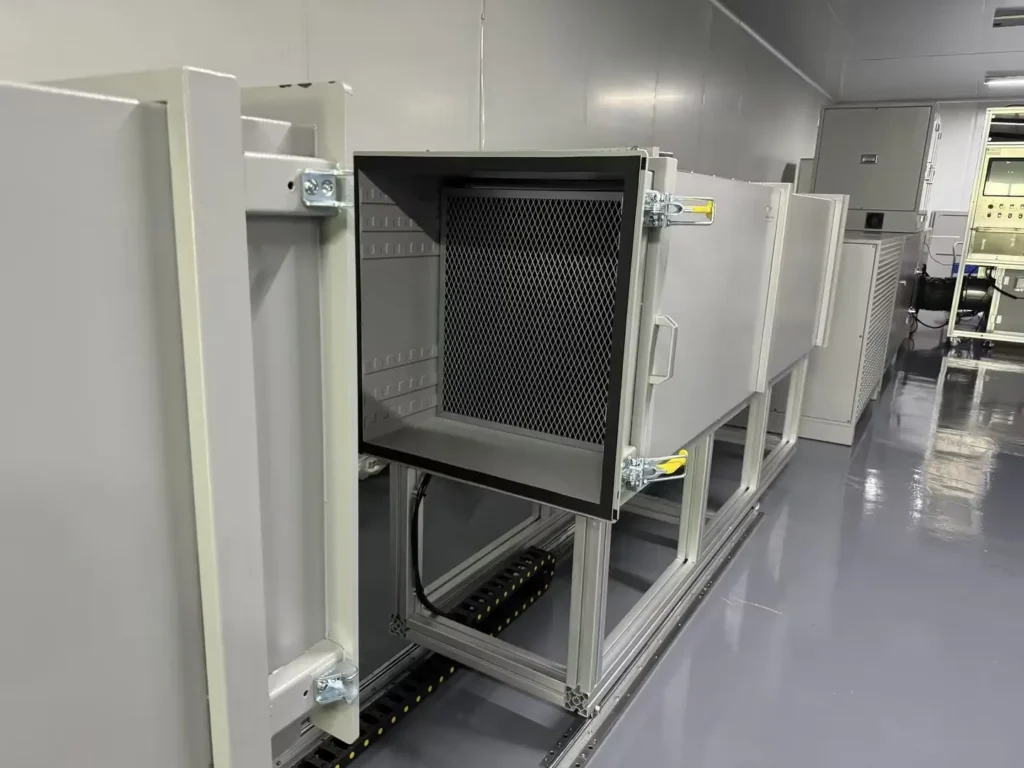
Explore the main causes of pressure drop in honeycomb activated carbon filters. Learn how cell size, thickness, carbon density, and airflow affect industrial filtration performance.