
Honeycomb Activated Carbon Engineering Guide
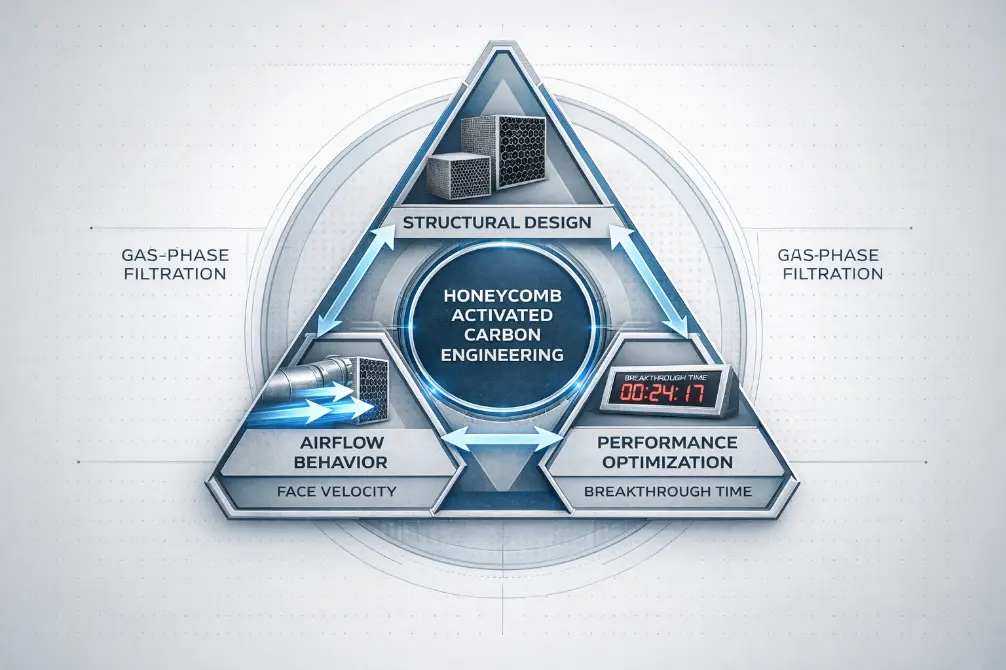
This engineering guide consolidates key technical principles behind honeycomb activated carbon performance, including airflow resistance, CPSI, contact time, and breakthrough behavior. Designed for industrial gas-phase filtration professionals, it provides a structured framework for system-level evaluation and optimization.
Why CPSI Alone Cannot Define Honeycomb Activated Carbon Performance
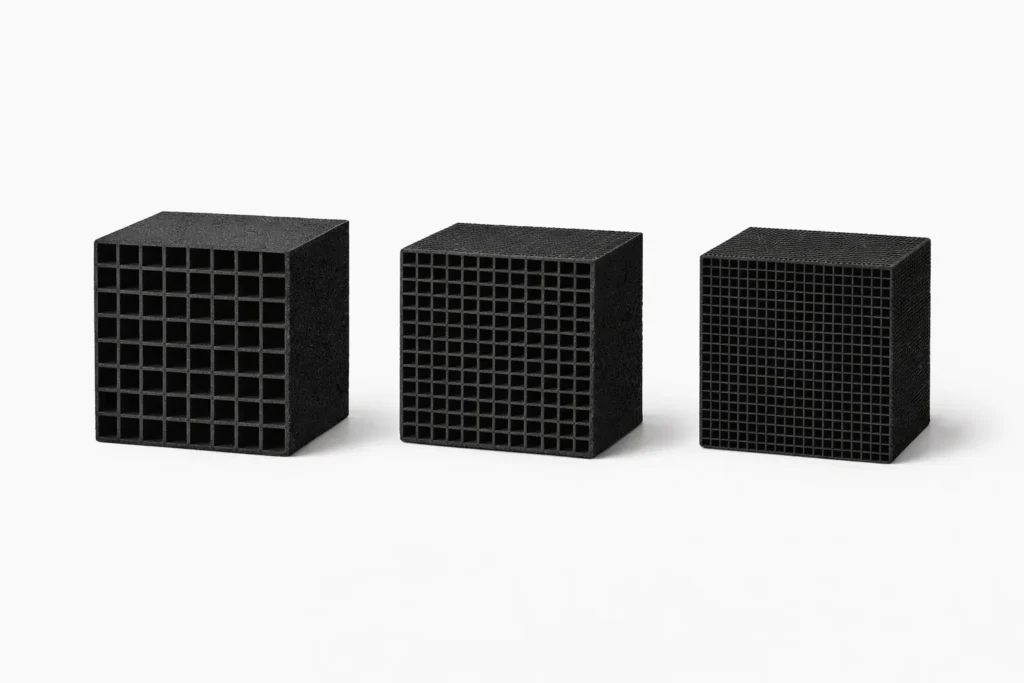
This article explains why CPSI (cells per square inch) should not be treated as a standalone performance indicator for honeycomb activated carbon filters. By examining airflow behavior, contact time, adsorption kinetics, and carbon utilization, it highlights the limitations of CPSI-only comparisons and provides a more practical engineering perspective for industrial gas-phase filtration design.
Pressure Drop vs Adsorption Performance in Honeycomb Activated Carbon Filters
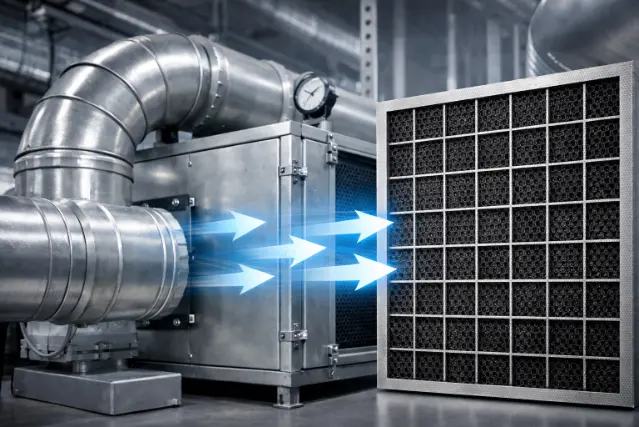
This article explains the engineering relationship between pressure drop and adsorption performance in honeycomb activated carbon filters. It clarifies why very low resistance can reduce contact time and carbon utilization, leading to earlier breakthrough. Practical guidance is provided to help engineers balance fan energy, airflow velocity, and adsorption kinetics for application-specific performance.
Design Considerations for Honeycomb Activated Carbon Filters in Industrial Systems

This article explains the essential design considerations for honeycomb activated carbon filters used in industrial equipment, including material selection, CPSI, adsorption efficiency, airflow direction, pressure drop, sealing, frame compatibility, and maintenance planning.