
Honeycomb Activated Carbon vs. Zeolite Honeycomb for VOC Treatment
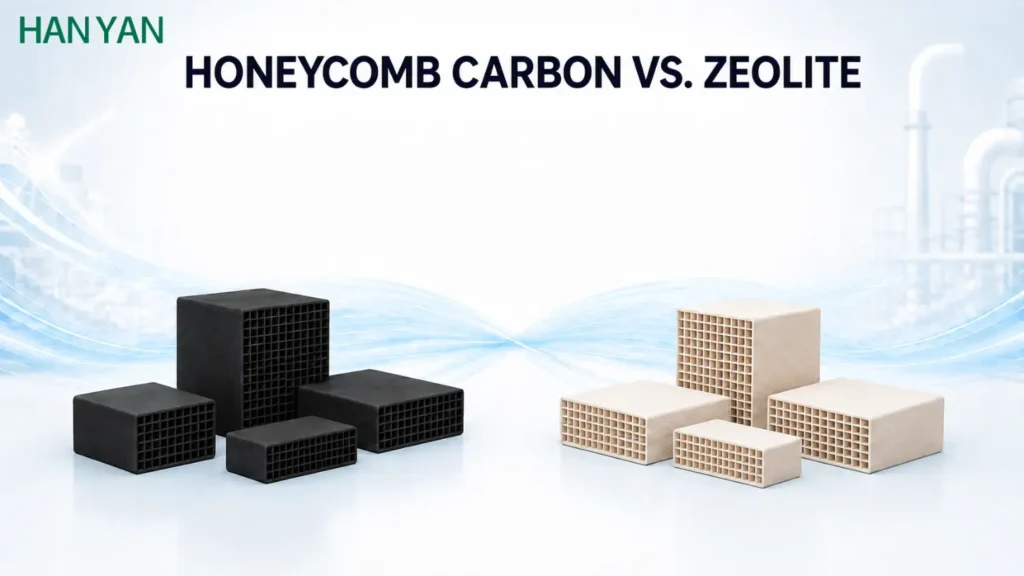
Honeycomb activated carbon and zeolite honeycomb have different advantages in VOC treatment. Learn how adsorption range, humidity, temperature, regeneration and cost affect material selection.
How to Prevent Air Bypass in Honeycomb Activated Carbon Systems

Air bypass can reduce the performance of a honeycomb activated carbon system by allowing untreated gas to pass through installation gaps. Proper block arrangement, sealing and airflow distribution help ensure more effective gas–carbon contact.
Honeycomb Activated Carbon for Odor Control in Wastewater Treatment Plants

Wastewater treatment plants can generate strong odors from hydrogen sulfide, ammonia, VOCs, mercaptans, and other odorous gases. This article explains how honeycomb activated carbon can be used for odor control in wastewater facilities, what affects adsorption performance, and when standard or specially treated carbon should be considered.
Honeycomb Activated Carbon for Printing Exhaust Gas Treatment: VOC and Odor Control in Packaging and Printing Lines

Printing and packaging lines can generate VOC-containing exhaust from inks, solvents, adhesives, coatings, and cleaning agents. This article explains how honeycomb activated carbon can support VOC and odor control in printing exhaust gas treatment, what factors affect adsorption performance, and what information buyers should confirm before selecting a suitable honeycomb carbon grade.
Why Honeycomb Activated Carbon Fails Early in Industrial VOC Systems
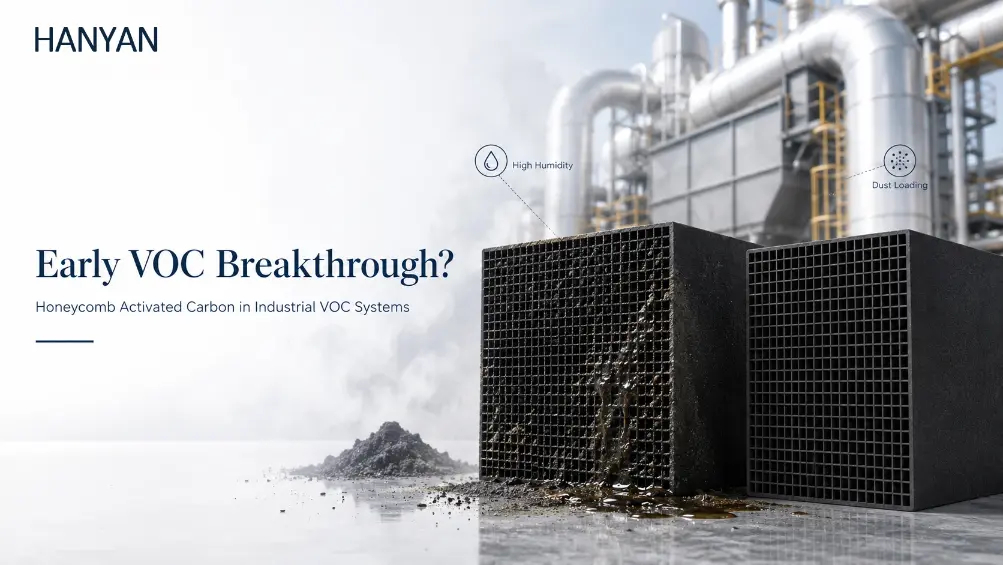
Honeycomb activated carbon may reach breakthrough earlier than expected when VOC concentration, airflow, humidity, pretreatment, installation, or carbon selection are not properly matched to the system. This article explains the most common causes of early failure and practical steps to improve service life in industrial VOC treatment.
Honeycomb Activated Carbon for Spray Booth VOC Treatment: Selection, Installation and Replacement
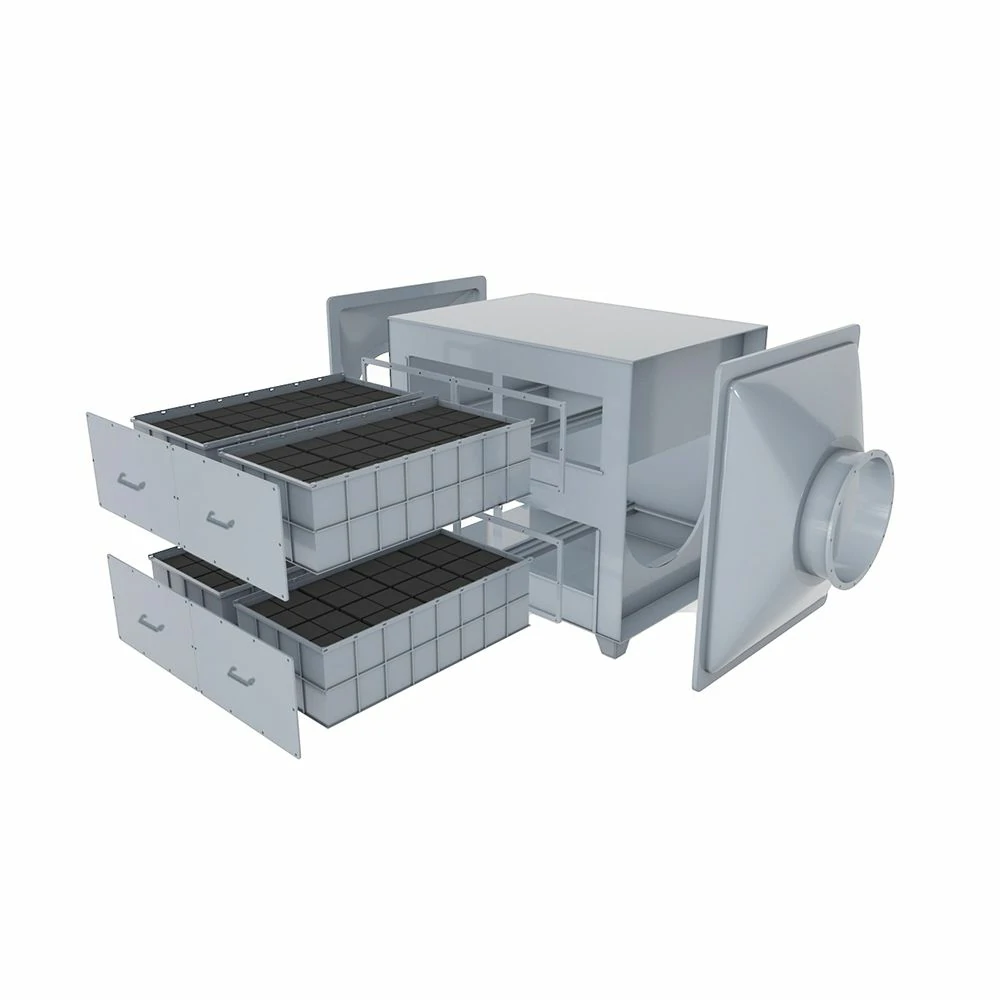
Spray booths often generate large volumes of VOC-containing exhaust air from coatings, solvents, and cleaning agents. This article explains how honeycomb activated carbon can be used in spray booth VOC treatment, what to consider when selecting a suitable grade, why pretreatment is essential, and how to identify the right time for replacement.
Emerging Trends in Gas-Phase Filtration: From Granular to Honeycomb Activated Carbon
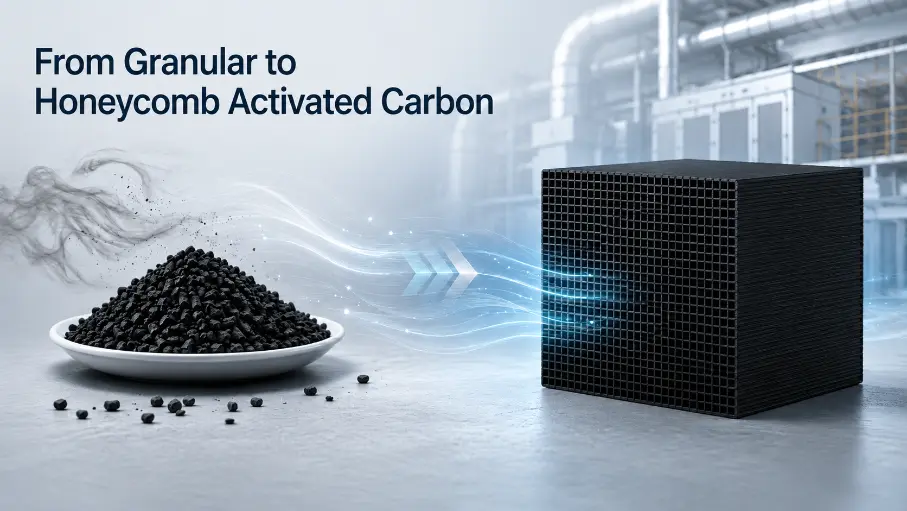
Gas-phase filtration is evolving from traditional granular activated carbon beds toward more structured and efficient media designs. Honeycomb activated carbon is gaining attention in VOC removal and industrial air purification because of its low pressure drop, straight airflow channels, and compact modular structure. While granular activated carbon remains widely used, honeycomb activated carbon provides new advantages for large-air-volume and energy-conscious purification systems.
Comparing Ceramic and Activated Carbon Honeycombs in Air Purification
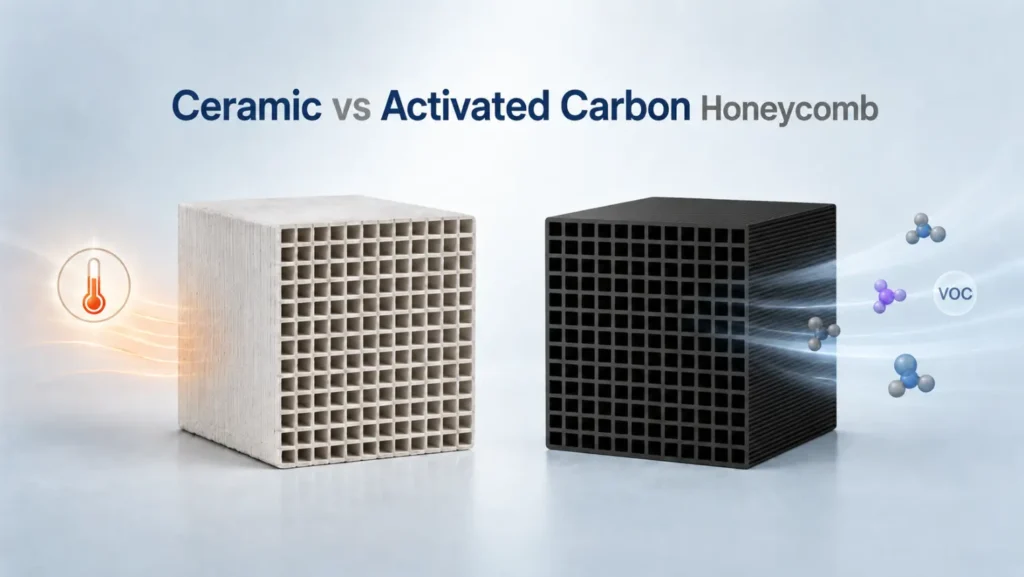
Ceramic honeycombs and activated carbon honeycombs both have honeycomb structures, but they serve different purposes in air purification. Ceramic honeycombs are mainly used as catalyst carriers or high-temperature substrates, while activated carbon honeycombs are more directly applied in VOC adsorption, odor control, and gas-phase filtration. For many current industrial air purification projects, activated carbon honeycomb offers broader adaptability under normal-temperature and low-to-medium concentration conditions.
How Humidity and Temperature Affect Honeycomb Activated Carbon in VOC Treatment

In industrial VOC treatment, the performance of honeycomb activated carbon is influenced not only by the carbon itself, but also by operating conditions such as humidity and temperature. High moisture can compete for adsorption sites, while elevated temperature can reduce equilibrium adsorption capacity and shorten effective service life. This article explains why environmental conditions matter and how operators can evaluate honeycomb activated carbon more realistically under actual system conditions.
How to Identify Breakthrough of Honeycomb Activated Carbon in Industrial VOC Systems
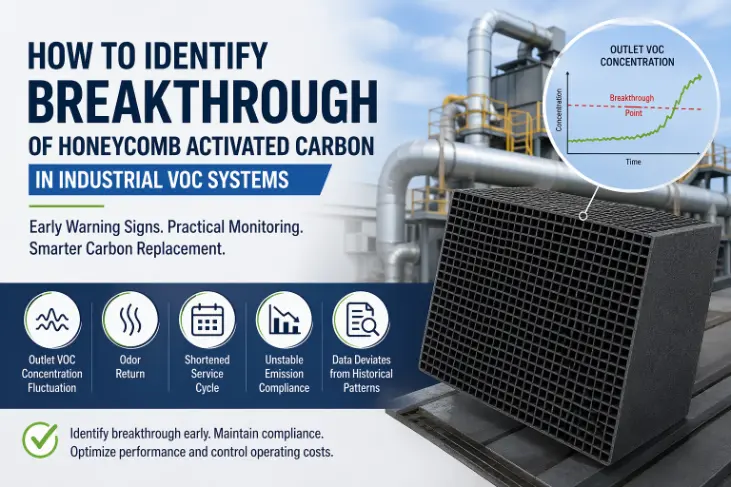
Breakthrough of honeycomb activated carbon does not always mean the adsorbent is fully exhausted. In industrial VOC systems, it often begins with subtle changes such as outlet concentration fluctuation, odor return, or shortened service cycles. This article explains what breakthrough means, what causes it, and how operators can identify it earlier through practical monitoring and operating records.